Wisconsin-based Minhas Distillery is the second oldest brewery in the U.S. It was established in 1845 and now has a production capacity of 7 million cases per year, with 1.5 million allocated to distilled spirits. Minhas uses this scale to help beverage alcohol entrepreneurs outsource production. In the latest edition of our Co-Packing Spotlight, Park Street University sat down with Alex Kotlyar, Business Development Manager at Minhas, to learn more about the services it provides and his advice to suppliers on how to work with a contract producer.
Our Interview with Minhas Distillery
What are the primary benefits of co-packing from your perspective?
It’s the fastest way to get your product into the market. You will definitely have an easier time growing your brand if you’re not worrying about investing capital and time into packaging equipment.
We scale with your demand, so, say you have a buyer that wants your product “Can we double our volume?” With us, the answer is always yes. We haven’t gotten to that point where we’re constrained by our capacity. That’s definitely the biggest advantage to co-packing, someone with a relatively small investment can get a brand started and they can focus on what they’re good at, which should be marketing and brand building. Leave the manufacturing to us. And while we take care of all the production, we work with just about every major distributor in the country.
If you combine our co-packing services with the back office and distribution support from Park Street, you have a turnkey solution for making a brand and getting it to market. All the back office, distribution, and storage, are taken care of and that is key to making a successful brand. Our customers can just focus on marketing and building your brand instead of getting caught up in hiring employees, doing repairs, and all those unexpected things that come with owning your own production facility.
What services does Minhas offer for suppliers?
We’re a full-service manufacturer – where we provide our customers with our recipes, bottling (our existing bottles or new ones), liquids that we make for our brands, we can also make for a client. We also help our clients to develop their own recipes. It really just depends on what each customer needs.
In the liquor industry, in order to get a new recipe approved by the TTB, it has to be made using approved flavors. If that’s been done before, that’s a very easy process to get approved, but if you’re trying to introduce a new flavor, you have to give yourself a bit more time for the TTB to approve it. There’s always an opportunity to do something new. It just takes a bit longer.
What information do suppliers need to have ready when approaching your company?
Having the product in mind and knowing what you want. It’s good to know what packaging you want, what bottle sizes, what kind of labels you’ll need, and what kind of liquids because a lot of times we’ll get contacted by entrepreneurs that just want an alcohol brand because they like alcohol but they’ve done no research and they really have no idea what they’re doing.
Other times, there’ll be clients that have done their homework, and that makes it much easier to work with someone who knows, “Hey, I want this liquid in this bottle, here’s my artwork. When can you get me to market?” and that’s usually all we need to get started.
Is there a minimum order quantity (MOQ)?
Our customers get to benefit from our economies of scale. We buy millions and millions of cans, millions of bottles. So if you’re using something that we’re already buying, you’re going to get much lower costs than you would by sourcing directly (which isn’t always an option) So on the spirit side, the MOQ is typically 800 12-pack cases of 750 ml equivalent.
We can be a bit flexible with the MOQ if the liquid you’re using is something we are already currently bottling. We can easily add 400 or 500 cases to the end of the run vs. having to set up production for something unique. But ideally, a new brand would plan to start with at least 800 cases for an initial run.
On the canning side, if you’re going to make an RTD or a beer, seltzer, or FMB product with us, typically the minimum runs are at least 40 pallets. Our can suppliers have increased the minimum requirement to preorder decorated cans to 204,000 cans per SKU. In order to match that and match up barrel size, we brew 10,000 gallons, which is 300 barrels at a time. So you would typically produce about 20-40 pallets at a time.
Does your team take care of the delivery?
All of our product is FOB Brewery, meaning we don’t pay for any shipping. We usually ask our co-packers to have a distributor pick up their order once its ready or ship it to a licensed warehouse. We prefer not to store our co-packers products as space is limited.
How does Minhas determine pricing for its services?
It helps when the customer has the recipe ready when they get started because if we know what the recipe is, we can calculate the cost of ingredients, bottles, labels, and packaging and then we add our labor and overhead. It helps to know expected volumes.
What is the average lead time from agreement to completion?
It depends on which product type you’re talking about. If you’re talking about something that requires a preprinted can, right now it is now taking somewhere between 2 to 4 months just to get the cans produced from the time they get approved artwork. And before you do that, you need to get all the labels and TTB approval so it really depends. I’d say the average would probably be about 3 to 6 months.
If it’s a liquor product that can be done much quicker. TTB approval times are sometimes less than 15 days and if we have all the supplies and everything ready, we can typically get started within six to eight weeks. It just depends if they need to come up with their own unique approved flavors and those kinds of things that could extend that timeline.
What are the most common mistakes you around contract production?
I always tell new suppliers to send us the bottle before they purchase it if they’re going to use an outside bottle because we want to make sure it fits our line. Not something we see often but that is definitely something you want to avoid.
Do you have any suggestions on how to get a successful outcome?
I think to be successful in this business: know who you’re selling to and ideally have those orders in place before you ever order production at scale because, and this goes back to the previous question about avoiding major mistakes, over-ordering, and producing more product than you can sell right away quickly leads to large storage charges and aging product that you might have to discount for pennies on the dollar.
For something like vodka or whiskey, that doesn’t matter too much because, even though you’re paying storage fees, the product doesn’t go bad. But if you produce a beer or a cream liqueur, the clock starts running the second you produce it, our beer has a 1 year guaranteed shelf life because it is pasteurized. Even though a year is a good shelf life, if you still have the product in a warehouse six months after production, you’re now left with a product that needs to be sold and ideally consumed within six months. You could end up in a position where you have to liquidate your product and that’s something you want to avoid at all costs.
Beverage alcohol partnerships with famous food brands took center stage in August. The month saw Kentucky Fried Chicken venture into rum, while Eggo and Sugarlands Distilling Co. partnered to introduce Eggo Brunch in a Jar Sippin’ Cream. Vizzy Hard Seltzer and Hardscoop also combined for a boozy treat, while several other more traditional offerings in beer, whiskey, and RTDs were announced by Goose Island, Jack Daniel’s, Glenlivet, and more. Below is Park Street’s full product release recap from August 2023.
August 2023 Alcohol Industry Launch Recap
The House of Suntory Released Legent Yamazaki Cask Finish Blend
The House of Suntory unveiled its Legent Yamazaki Cask Finish Blend, its newest limited-edition whiskey in the bourbon category. The new offering showcases a selection of bourbon aged in Spanish Oak sherry casks to impart rich notes and a vivid spiced finish. The 114 Proof latest blend will be offered for $199.99 at select locations in the U.S., Canada, Germany, and Global Travel Retail.
“Partnering with Fred Noe, Seventh-Generation Master Distiller of James B. Beam Distilling Co, on Legent Bourbon was an honor and an exciting opportunity to create something special that represents East meets West,” said Fifth-Generation Chief Blender of Suntory Whisky Shinji Fukuyo. “Taking it one step further to create this limited-edition release that is finished by the climate of Yamazaki Distillery, creating its unique matured aroma, and reimagined with our blending techniques has been an exciting endeavor. The result is a first-of-its-kind whiskey with new layers of rounded and complex flavors.” (Source)
Novo Fogo Introduced New Brazilian Organic Cocktails
Novo Fogo, a Brazilian sugarcane spirit brand, announced a twist on its canned cocktail line. This is a reformulated and redesigned product evolution of Novo Fogo Brazilian Organic Cocktails. The RTD cocktail line comes in three tropical flavors and is USDA-certified organic. The 100% natural ingredient cocktail contains 9% ABV and 150 calories in 12 oz. sleek cans. Offered for $3.75 per can and $14.99 for a four-pack.
“We have always been committed to genuinely reflect Brazilian culture in our brand persona, while also observing and respecting North American consumer trends. These new organic cocktails are a natural evolution of our understanding of the world and incorporate the positive, colorful, and vivid inspiration that Sofi Tukker brought to the brand. As with everything we do these days, our new Brazilian Organic Cocktails represent the intersection of integrity and joy,” said Novo Fogo’s Founder and CEO, Dragos Axinte. (Source)
Jack Daniel’s Released a Limited Edition Añejo Tequila Barrel-Finished Whiskey
Jack Daniel’s introduced its newest tequila innovation, Distillery Series Selection #11. This limited-edition whiskey finished in añejo tequila barrels delivers flavors of agave and oak, with aromas of sweet citrus and light oak complementing a taste of brown sugar and dried spices. The tequila expression is in stores at a suggested retail price of $41.99 in 375 ml and bottled at 90 proof (45% ABV). It’s also available at Jack Daniel Distillery and in select stores in Tennessee.
“As one of the most complete distilleries in the world, we’re fortunate to have the ability to experiment with every part of the whiskey-making process, and that’s what our Distillery Series is all about,” said Chris Fletcher, Jack Daniel’s Master Distiller. “This añejo tequila barrel-finished whiskey pushes the bounds on what people may expect out of a Tennessee Whiskey, yet still has the familiar characteristics that are uniquely Jack Daniel’s.” (Source)
Blue Moon Brewing Co., a Molson Coors Beverage Company subsidiary, will be dropping its nonalcoholic beverage later this year: Blue Moon Non-Alcoholic Belgian White. The Belgian-style wheat brew is eyeing to be released in six 12-ounce pack cans that contain .5% alcohol by volume with 80 calories.
“Consumers know and trust Blue Moon, they enjoy consistent quality and a subtle citrus taste each time they reach for a Blue Moon Belgian White. We are so proud to deliver that same unique experience in the non-alcoholic version,” said Jamie Wideman, VP of Innovation for Molson Coors Beverage Company. “As the No. 1 craft brand in the U.S., Blue Moon has an opportunity to deliver a non-alcoholic craft brew from a brand that drinkers trust.” (Source)
Glenlivet Unveiled New Twist & Mix Cocktails
Glenlivet Speyside Single Malt Scotch Whisky continues to expand its line, releasing The Glenlivet Twist & Mix Cocktails. The new line is a ready-to-serve, whisky-based cocktail with two flavor offerings. The Old Fashioned flavor delivers notes of orange, nutmeg, and cinnamon, while the New Manhattan flavor features notes of cherry and ginger. The new whisky-based cocktail is offered in a 375-ml bottled format, containing eight servings, and will be sold for an SRP of $21.99.
“The launch of The Glenlivet Twist & Mix Cocktails is the latest example of The Glenlivet leading the category in modernizing single malt scotch whisky,” said Johan Radojewski, Vice President Marketing – Scotch, Irish & Prestige Whisk(e)y, Pernod Ricard USA. “With this new innovative product, we are inspiring people to enjoy single malt scotch whisky on more occasions and providing a solution to meet consumer demand for high quality, freshly mixed cocktails that are easy to serve and enjoy with friends and family.” (Source)
Goose Island Released 2023 Bourbon County Stout Lineup
Goose Island Beer Company rolled out its annual Bourbon County Stout collection series. Its 2023 line-up includes: 2023 Bourbon County Brand Original Stout, 2023 Bourbon County Brand Eagle Rare 2-Year Reserve Stout, 2023 Bourbon County Brand Angel’s Envy 2-Year Cask Finish Stout, 2023 Bourbon County Brand Bananas Foster Stout, 2023 Bourbon County Brand Backyard Stout, and 2023 Bourbon County Brand Proprietor’s Stout.
“As architects of bourbon barrel-aged stout, our 2023 lineup could not be more reflective of what we strive to achieve here at Goose Island Beer Co.,” said Todd Ahsmann, President, Goose Island Beer Co. “Our brewers demonstrate not only a mastery of their craft in brewing but also a mastery of their skill in blending — which is such a crucial component to the unique quality and character of Bourbon County. From our Original Stout, to our exceptional variants, and to our newest innovation, Bourbon County Cask Finish Stout, our 2023 lineup showcases the work and dedication that goes into every pour of the original bourbon barrel-aged stout.” (Source)
Vizzy Hard Seltzer And Hardscoop Partnered On Alcoholic Creamsicle
Vizzy Hard Seltzer has teamed up with alcohol-infused ice cream maker Hardscoop, turning Orange Cream Pop Hard Seltzer into Boozy Orange Cream Pop. The Hardscoop Orange Cream Pop is 12.5% AVB, packaged in 100-ml tubes, and contains 12 pieces in a box. The product is available for a limited time at Hardscoop’s official website and can only be shipped to 43 US states due to state liquor regulations.
“Vizzy was inspired by the continued resurgence of 90’s nostalgia in launching our Orange Cream Pop Hard Seltzer earlier this summer,” said Joy Ghosh, VP of Above Premium Flavor at Molson Coors. “The response was so positive the brand wanted to continue to provide the Vizzy vibes with a totally new format for legal drinking age consumers. Enter: a partnership with Hardscoop Ice Cream.” (Source)
Fireball Whisky Introduced Fireball Dragnum
Fireball Whisky is introducing Fireball Dragnum to the market. Fireball Dragnum is a champagne-inspired SKU encased in a sleek 1.75-liter glass bottle while sticking to the taste of the classic Fireball cinnamon whisky. The offering is a elevated design twist that complements parties and holiday celebrations. The latest release is offered foan an SRP of $24.99 and is rolling out nationwide.
“We know Fireball turns any boring experience into a memorable one and we had a hypothesis that, if given the choice, fans would reach for a magnum of Fireball – a Dragnum, if you will – over a magnum of the same old, same old to ignite holiday festivities,” said Danny Suich, also commonly referred to as “Mr. Fireball,” mostly by himself. “But we also wanted to up the fancy factor a bit to help make the season feel extra special. Because an epic celebration deserves something spicier than usual.” (Source)
Kentucky Fried Chicken Launched Its First-Ever Spirit With New Rum
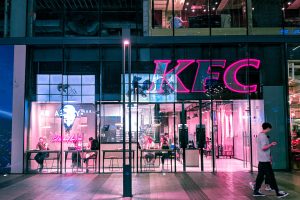
International brand Kentucky Fried Chicken has partnered with Dead Man’s Fingers, marking its first brand’s venture into spirits and entrance into the rum category. The limited edition 11 Herbed and Spiced Rum has a balance ofherbsbs and spices, including black and white pepperandgolden breading, infused with notes of caramel, vanilla, and nutmeg.
KFC and Dead Man’s Fingers will be opening a pop-up Chicken and Rum pub to celebrate on Friday, September 1, and Saturday, September 2. (Source)
Eggo Partnered With Sugarlands Distilling Co. to Launch Brunch In A Jar
Waffle maker Eggo is teaming up again with Sugarlands Distilling Co. to launch a brunch-inspired cream liqueur: Eggo Brunch in a Jar Sippin’ Cream. The latest innovation blends the flavors of buttered, toasted Eggo waffles, sweet maple syrup, and savory bacon slices. Eggo Brunch in a Jar will be available at select retailers nationwide and online in select states.
“Working with Eggo to bring Eggo Nog to life last year was a tremendous experience, so we’re thrilled to partner with them again to create a brunch-inspired version of our Sippin’ Cream, that parents can enjoy year-round,” said Greg Eidam, Master Distiller at Sugarlands Distilling Co. “Our distillery team crafted Eggo Brunch in a Jar to combine flavors of toasted Eggo waffles, rich maple syrup and notes of creamy butter, with a savory hint of bacon in every sip. Eggo Brunch in a Jar is the perfect way to elevate weekend brunch with a fun cocktail or to enjoy classic brunch flavors during your well-deserved ‘me time’ in the evening.” (Source)
In this presentation, Effie Panagopoulos, CEO of Kleos Mastiha Spirit, touches on Gen Z and modern consumers influence on the beverage industry, including their preferences for ethical marketing, mental health awareness, value-driven choices, and non-alcoholic options.
She also discusses the rising influence of female consumers in the beverage alcohol space. Effie reveals the interests and characteristics behind these consumers and how brands can market to them in a way that embraces and respects their values.
In this video, Shelley Elkovich, Founder of award-winning N/A cocktails brand For Bitter For Worse, discusses the potential of occasion-based marketing for alcohol and non-alc brands. She gives examples of how to change your branding, labeling, and messaging to fit special occasions.
In this video from Bar Convent Brooklyn, Cole Clark, President of AmygdaLaunch, discusses the importance of analyzing beverage alcohol baskets to understand purchasing decisions made by consumers. Clark emphasizes how event-based purchases can teach us more about the values and motivations of consumers than demographic models.
How Gen Z and Modern Consumers are Influencing the Beverage Industry
Kleos Mastiha (0:10)
My name is Effie Panagopoulos, the first Greek woman in history to start a liquor brand. I’ve been in the industry for going on 25 years. My brand is called Kleos, a Greek liqueur made from a superfood called Mastiha. Today, I’m talking about women and Gen Z, who both happen to be very strong and avid consumers of my startup brand. We’ll explore changing demographics, the rise of the “she-economy,” and the 18-to-25-year-old consumer in the beverage space.
Kleos Mastiha (0:53)
“We live in a world that is owned by men, designed by men, managed by men, yet we expect women to be active participants in it.” This quote is from the book What Women Want by Paco Underhill, whom I met while doing a liquor store tasting in Manhattan. The best way to get in touch with your consumers is doing your own store tastings. If you can’t stomach standing in a liquor store on a Friday night selling your own product, you don’t belong in this business. Underhill runs a consumer insights company called Envirosell that monitors real retail behavior, revealing, for example, that Jack Daniels buyers b-line straight for their bottle and exit, whereas women and Gen Z browse far more dynamically.
Kleos Mastiha (3:46)
Historically, liquor marketers used three “influencers” to appeal to women: “white, light, and bright.” But the unsophisticated “make-it-pink” marketing has to end. Even major companies with mega-budgets fail when they pander. In 2005, Bacardi spent $10 million launching Bacardi Light Island Breeze with Kim Cattrall. On Sex and the City, the characters embraced indulgence—Cointreau grew 25,000 cases in one year because of Cosmopolitans. Yet Cattrall told the press, “I’m not a big drinker, and when I do, I get a headache.” Total disconnect. Similarly, Diageo’s “Jane Walker” campaign faced backlash for implying Scotch was intimidating to women, despite 30% to 40% of Scotch drinkers already being female.
Kleos Mastiha (8:40)
Meet the modern woman: average age 38.5, married, mother of two, and primary breadwinner. Women represent 51% of the U.S. population, $7 trillion in purchasing power, and 85% of consumer spending. Women now outnumber men in the U.S. college-educated labor force (50.7%), and by 2030, Morgan Stanley predicts 45% of U.S. women of prime working age will be single. Women are educated, earning, living longer, and serving as key influencers in their social circles who share products via home entertaining.
Kleos Mastiha (10:37)
A survey by Kearney of 1,000 women showed that over 70% value female-focused strategies: pro-female marketing, products designed for women, female-founded companies, charity contributions to female non-profits, and executive female leadership. Furthermore, women and Gen Z express activism through purchasing power; women across all income levels report a willingness to pay a premium for brands supporting the advancement of women. To win with female consumers, engage in personal interactions, maintain crystal-clear value propositions, avoid pink stereotypes, and foster genuine, authentic community connections.
Kleos Mastiha (16:35)
Turning to Gen Z: they are the most diverse (48% racial or ethnic minorities) and educated generation yet, and the first true digital natives. While headlines claim Gen Z doesn’t drink, trends like “BORGs” (blackout rage gallons with electrolytes) show a complex picture. Crucially, 72% of Gen Z consumers feel it is appropriate for brands to address mental health, and 35% favor campaigns involving mental health influencers. Micro-influencers (3,000 to 10,000 followers) yield far higher engagement than mega-celebrities whose messaging gets muddled.
Kleos Mastiha (22:08)
In the beverage business, Gen Z consumers prioritize sustainability, environmentalism, anti-racism, and overall value. They seek out better-for-you options, value-conscious choices (like Don Julio over-indexing despite its price point), and unique, authentic stories. Key emerging trends include mood-lifting alcohol alternatives (like cannabis-infused drinks and adaptogenic/functional beverages), functional thirst-quenchers with neurotropics or herbal supplements, and diverse global flavor profiles. Thank you so much for listening, and cheers!
Using Occasion-Based Marketing To Reach Modern Consumers
Shelley Elkovich (0:12)
I’m the co-founder of For Bitter For Worse. We make complex non-alcoholic cocktails with love, not alcohol. The modern consumer is moderating their alcohol intake, focusing on occasion over ABV. They are alcohol-flexible and seek transparency. According to IWSR data, 80% of non-alc purchasers also consume alcohol. Consumption patterns fall into three main groups:
Substituters (57%): People who drink non-alcoholic beverages on some occasions and full-strength alcohol on others.
Blenders (21%): Those who switch between full-strength and non-alcoholic drinks within the same occasion.
Abstainers (22%): Consumers who do not drink alcohol at all.
Shelley Elkovich (1:42)
Macro trends driving moderation include:
Generational Mindset: Millennials and Gen Z are flexible, creative thinkers taking a non-binary approach to lifestyle choices—similar to flexitarian diets (which 47% of Americans identify with).
Mental Health Awareness: 90% of Americans believe there is a mental health crisis. Over 43 million U.S. adults take antidepressants, many of which are incompatible with alcohol, prompting a search for compatible alternative beverages.
Alternative Substances: Cannabis and psilocybin are increasingly accepted, with consumers seeking “420-friendly” non-alcoholic drinks while socializing.
Shelley Elkovich (3:54)
Occasion-based shopping drives about half of all grocery trips in the U.S. If a brand can unlock the right occasion, it can significantly increase sales:
Niche Positioning: Athletic Brewing successfully built its brand identity around sports and active lifestyle occasions.
Packaging Formats: Our aperitif, Eva’s Spritz, is popular in 750ml bottles for formal events and weddings, whereas the same product in a can format fits music festivals like Coachella.
Cultural Festivals: Events like Coachella, Sundance, and Stagecoach are introducing curated non-alcoholic menus, offering brands prime opportunities to steal market share from standard sodas and water.
Retail Placement: Non-alcoholic brands must proactively educate distributors and buyers on optimal set placement and curated shelf mates.
Shelley Elkovich (6:19)
Consumer demand for transparency heavily influences buying decisions:
Label Power: 63% of consumers read labels, with product labels accounting for 48.8% of consumer decision-making—more than brand websites or word-of-mouth recommendations.
Ingredient Clarity: Non-alcoholic beverages must list ingredients. Alcohol brands like JuneShine and Haus that proactively demonstrate label transparency gain a strong competitive edge.
Purpose & Values: 89% of U.S. consumers hold positive views of purpose-driven brands. Gen Z is particularly vigilant: 75% research companies to verify if they are truly “walking the talk.” Hollow marketing or greenwashing can quickly backfire.
Shelley Elkovich (8:05)
The modern consumer is alcohol-flexible. While non-alcoholic products are designed for underserved non-drinkers, they also serve as versatile cocktail bases. For example, hosting an event for 350 corporate guests where a complex non-alcoholic cocktail served as the baseline—with an optional gin float—created an inclusive environment where everyone enjoyed the exact same glass. Collaborations between traditional spirits and non-alcoholic brands offer significant potential for modern hospitality.
The Value of Analyzing Beverage Alcohol Baskets
Cole Clark (0:11)
First, thank you to the Park Street team—this is an awesome event! I run a beverage alcohol product innovation analytics company called Amygdalaunch, and I’m a proud member of Gen Z as well. Amygdalaunch works with both large suppliers and small brands to uncover opportunities in the marketplace.
Cole Clark (0:50)
The beverage alcohol industry is more competitive than ever: since 2020, over half a million new labels have been approved by the TTB. Spirits—specifically whiskey and tequila—are growing at an annual rate an order of magnitude above the rest of the industry. Often, when asked to define a target consumer, we describe them using demographics like age, income, geography, or generation. But when describing a best friend, we talk about shared experiences, values, interests, and lifestyle. According to Pew Research, generational cutoffs are remarkably arbitrary consensus definitions. By using basket analytics, we gain a holistic perspective on consumer behavior, purchasing intent, and occasions.
Cole Clark (3:17)
To illustrate, consider an event like a concert or sports game: attendees span diverse demographics, but they share a common interest. Using basket analytics, we can detect and accurately classify 85% to 90% of event-driven alcohol purchases by measuring four key indicators:
Basket value
Category diversity
Price point diversity
Overall item count
When a transaction ranks in the top 25% across these four measures, we can state with 600 times more confidence that the purchase is tied to a nearby in-person event.Cole Clark (4:32)
Shoppers evaluate purchases holistically based on an intended use case rather than analyzing individual product specs. For example, a consumer buying tequila for after-work drinks might also purchase a six-pack of seltzers for a game and premium RTDs for a movie night. To steal market share from an established competitor, a new entrant needs to replace that central product while the surrounding basket items remain the same. Analyzing these basket correlations helps identify true competitive neighborhoods across categories like tequila, vodka, and whiskey.
Cole Clark (8:24)
By comparing two different tequilas—a higher-priced artisanal brand versus a lower-priced, high-volume brand—we observe distinct competitive behaviors:
Higher-Priced Tequila: Competes within a smaller, price-sensitive neighborhood biased toward clear, premium spirits across categories.
Lower-Priced Tequila: Holds a wider competitive neighborhood distributed evenly across lower price points in vodka and whiskey.
Analyzing these basket statistics provides valuable leverage for sales teams and distributors. Demonstrating that your product drives larger total basket value, higher item counts, or premium price-per-unit metrics proves direct value to a retailer’s bottom line. Cole Clark (10:42)
Moving beyond rigid categories, subcategories, and price points to focus on consumer use cases unlocks significant cross-category opportunities. If you remember one key takeaway, let it be “opportunity through empathy.” By understanding consumers as human beings making decisions rather than simple demographic data points, brands can navigate and win in a highly competitive marketplace.
In this presentation from Bar Convent Brooklyn, Kiowa Bryan, On-Trade and Marketing Director at Spiribam USA, discusses her key digital marketing tips for alcohol brands. Bryan provides tips on analyzing data and how alcohol brands can make sure they are competitive in the digital marketing realm.
In this video, Mike Boswell, the Vice President of Digital E-commerce at Breakthru Beverage Group, discusses the future of B2B E-commerce in the alcohol industry and its potential impact on your beer, wine, or liquor brand. Discover how to optimize content for B2B platforms, tailor your brand’s presence, and stay ahead in this rapidly evolving industry.
In this video, Josh Jacobs, the CEO of a Speakeasy Co., discusses three major consumer trends related to the alcohol industry and three strategies for how brands can improve the e-commerce and at-home experience.
In this video, Ryan Malkin, a principal attorney at Malkin Law, provides an overview of the current direct to consumer market for spirits, wine, and beer. He dives into what direct-to-consumer means in each alcohol category, the states where each category can legally ship direct-to-consumer, and estimated size of direct-to-consumer channel in the U.S.
Key Digital Marketing Tips for Alcohol
Kiowa Bryan (0:13)
My background is in hospitality—I was a bartender for 15 years before moving into brand ambassador and marketing roles at Speakeasy Co. and Spearhead USA. Prior to the pandemic, our business split was 80% on-premise and 20% off-premise. Almost overnight, 80% of that business disappeared, pivoting us to 100% off-premise, split evenly between retail and our online e-commerce store. Navigating that shift required adopting new platforms, learning web design on the fly, and balancing marketing with on-trade responsibilities as venues reopened.
Kiowa Bryan (2:50)
In marketing, the “Rule of 7” states that a potential customer needs to see your brand seven times before pulling the trigger on a purchase. Hitting those touchpoints doesn’t require endlessly creating new assets. Establish one strong hero image for each product expression that aligns with your brand’s ethos, and reuse it consistently across social media, roll-up banners, in-store point-of-sale displays, and email newsletters. This repetition builds immediate visual recognition while keeping photography costs down.
Kiowa Bryan (4:43)
Digital marketing eliminates the guesswork of traditional mass media because you can track customer behavior, analyze performance, and adjust strategies in real time. Digital execution requires “closed-loop marketing”—a framework where sales and marketing function as a continuous feedback loop rather than a linear funnel. Every digital ad, social post, or search impression must contain a clear, direct path leading the user back to your website or online storefront.
Kiowa Bryan (6:37)
Monthly performance reviews are essential to refine digital strategy:
Sit down once a month to review analytics across paid ads, email campaigns, web traffic, and e-commerce conversions.
Use monthly data insights to make tactical adjustments for the following month.
Prioritize short video content—even a two-second clip yields significantly higher reach and engagement than a static photo.
Kiowa Bryan (7:50)
Your website serves as your brand’s primary first impression. Between 60% and 75% of users browse on mobile devices, making mobile optimization just as critical as the desktop view. Because your website is the first place interested consumers land after discovering your product, your primary operational goal on-site must be capturing user data to construct a direct email marketing list.
Kiowa Bryan (8:55)
Third-party social platforms evolve and change, but an email subscriber list remains a permanent, owned asset. Effective ways to grow and leverage your email list include:
Offering immediate value, such as a 10% discount pop-up in exchange for an email address.
Collecting emails via giveaways or raffles at trade shows and live events.
Maintaining a monthly sending cadence to avoid spamming subscribers.
Delivering value in every email through exclusive recipes, venue partnerships, or nationwide event calendars.
The Future of B2B Alcohol E-commerce from Breakthru’s Mike Boswell
Mike Boswell (0:09)
I’m Mike Boswell, Vice President of Digital and E-Commerce at Breakthru. Breakthru is over an $8 billion business across 16 U.S. markets, covering beer, wine, and spirits as the third largest distributor in the country. Today, I’m going to talk about B2B e-commerce, what to expect, how it’s evolving, and what you should expect from your distributors as this channel grows.
Mike Boswell (1:26)
While e-commerce grew 131% during the pandemic and has since leveled out, continuous growth remains ahead. Looking at grocery, beverage alcohol represents about 9% of total offline sales, but only 4% to 5% of online sales. Closing that online share gap represents a $1.4 billion opportunity left on the table. Brands need to work with distributors and retailers like Kroger to ensure beverage alcohol is prioritized online with high-quality content. Furthermore, while B2C e-commerce is about $6.1 billion (representing 4% to 5% of total volume), B2B e-commerce is vastly larger—with one distributor alone already reporting $3 billion—and will eventually account for 30% of your total volume.
Mike Boswell (5:06)
B2B experiences are shifting away from traditional, alphabetical catalog listings toward personalized, relevant content. At Breakthru, we segment accounts—such as craft spirit or fine wine accounts—so that search results automatically prioritize those categories for relevant buyers. Brands must deliver rich product descriptions, keywords, and high-quality images to ensure their products are picked up by these personalized search algorithms. Additionally, contextual search is replacing keyword matching; searching for a major brand like High Noon will now contextually suggest other RTD options within the portfolio.
Mike Boswell (8:47)
Adopting B2B e-commerce directly empowers sales reps. A Breakthru study found that sales reps in the top 10% of B2B platform adoption grow their business 30% faster year-over-year and sell 14% more points of distribution. By directing buyers to order reorders online, reps save five minutes per order—accumulating to 26,000 hours saved across our team last year. This extra time allows reps to focus on securing new points of distribution, cocktail menu placements, and retail displays for your brands.
Mike Boswell (9:52)
To win in B2B e-commerce, brands should raise their expectations with distributors to demand personal, relevant online experiences. Active accounts on B2B platforms buy more products, driving growth and profitability for everyone.
Mike Boswell (10:44)
To summarize, brands must focus on three core actions:
High-Quality Visual Content: Provide primary bottle shots, hero images, lifestyle photography, and back-of-bottle images.
Rich Product Descriptions: Craft detailed copy with relevant category keywords.
Asset Management Solutions: Utilize Product Information Management (PIM) or Digital Asset Management (DAM) systems to seamlessly deliver updated content to distributors in bulk.
Using E-Commerce to Improve the At-Home Experience for Alcohol Consumers
Josh Jacobs (0:10)
I’m the CEO of Speakeasy Company. We’re an e-commerce platform working with about 300 brands, ranging from emerging players to Sazerac, Edrington, Stoli, William Grant, WhistlePig, and Heaven’s Door. My objective is to show you how radically different today’s consumer is compared to pre-pandemic times and how early adopters can take advantage of this shift.
Josh Jacobs (0:35)
Three major consumer trends define today’s market:
Drinking at Home: The majority of polled consumers indicate they drink more at home now than pre-pandemic, with only 5% drinking more in bars and restaurants.
Premiumization: Driven by an “at-home treat” mindset, 2022 was led by premium spending across every category. Notably, 40% of older Millennials drink more at home and spend more than Boomers.
Experience Over Product: Producing great juice is no longer enough. Successful beverage alcohol companies operate primarily as marketing-first organizations that build curated experiences.
Josh Jacobs (2:09)
Online channels solve the traditional limitation of fitting a brand’s narrative onto a tiny bottle label. D2C e-commerce enables three key strategies to deliver a next-level, at-home premium experience:
Josh Jacobs (3:04)
1. Product Bundles & Curated Occasions:
Unique experiences do not need to be overcomplicated. Brands like Frey Ranch combine spirits with branded merchandise, turning buyers into paid brand ambassadors. Other brands design experience-driven gift packages—such as vodkas shipped in light-up cases or paired with novelty party props—to create memorable occasions that build lifelong fans. On-site exclusives, like Villa One offering signed Nick Jonas guitars, leverage digital platforms for limited-inventory offerings impossible to stock in physical retail stores.
Josh Jacobs (4:49)
2. Strategic Collaborations (“Collabs”):
Partnering with influencers or adjacent brands opens access to highly engaged audiences overnight. For example:
Nobilis Spirits leveraged Mike Rowe’s dedicated audience to sell thousands of bottles in days.
Hoon Young partnered with author Jack Carr, generating more sales in 24 hours than in any prior month.
Nosotros collaborated with Robb Report to reach luxury demographic lists.
Eastside Distilling partnered with Frito-Lay to create a Lay’s potato-based vodka that sold out within hours.
Josh Jacobs (7:25)
3. Limited Time Offers (LTOs):
LTOs leverage scarcity and impulse buying to answer the consumer question: “Why buy now?” During Dry January, WhistlePig launched a low-ABV “Dry Orange Old Fashioned” mixer kit, driving one of their highest-volume sales months on our platform. Similarly, Heaven’s Door released the luxury Bootleg Series featuring Bob Dylan’s artwork on ceramic bottles housed in leather cases. High-profile D2C releases demonstrate immense commercial scale—such as Tesla Tequila generating over $10 million in sales, or top non-celebrity digital brands reaching $5 million in annual e-commerce revenue.
Josh Jacobs (9:24)
Product bundles, collaborations, and LTOs allow brands to differentiate from the crowd, drive customer acquisition, and foster loyal brand advocates. Globally, e-commerce alcohol is projected to add $31 billion over the next four years. While still nascent in the U.S., digital alcohol sales present a massive frontier for forward-thinking brands.
An Overview of the Direct-to-Consumer Market for Spirits
Ryan Malkin (0:09)
My name is Ryan Malkin, and I have a law firm based in Miami that I started about 10 years ago. Previously, I was in-house counsel at Pernod Ricard in New York, and now I work with both the biggest and smallest alcohol brands in the world, as well as many Park Street clients. Today, I’m setting the stage to walk through the basics of direct-to-consumer (DTC) fulfillment, largely focused on spirits and providing an overview of the current legal landscape.
Ryan Malkin (0:43)
The DTC market for beverage alcohol is expanding rapidly and is expected to hit $17 billion this year, growing to $20 billion by 2027. Pure DTC refers to a supplier selling directly to a consumer—similar to a Napa Valley winery model. During COVID, states like New York temporarily permitted distilleries to ship directly to consumers via mail, but many of those emergency provisions have since been rolled back. Pure DTC for spirits remains extremely limited across the U.S. compared to wine, which enjoys widespread shipping authorization.
Ryan Malkin (2:38)
In spirits, pure DTC is mostly restricted to intrastate sales (such as within California). It is important to distinguish between shipping and delivery: shipping involves common carriers like FedEx or UPS transporting product over longer distances, whereas delivery refers to a local retailer handling the “last mile” drive from store to home. The Distilled Spirits Council (DISCUS) and the American Craft Spirits Association (ACSA) are actively lobbying via initiatives like Ship My Spirits to pass legislation bringing spirits DTC parity to wine.
Ryan Malkin (4:20)
Because pure spirits DTC is legally restricted in most places, spirit brands utilize a modified three-tier DTC model using third-party platform technology (such as Speakeasy) and retail partners. Under this setup:
The brand sells inventory to its wholesaler (e.g., Park Street in New York).
The wholesaler sells that inventory to a licensed retail partner.
The consumer places an order on the brand’s website (powered by the third-party platform).
The licensed retailer receives, processes, and ships the order directly to the end consumer.
Ryan Malkin (6:02)
While this modified model creates a seamless, brand-centric checkout experience for the consumer, the supplier does not capture the higher profit margins that a winery would under pure DTC. The brand is still selling through the standard three-tier system and receiving its standard wholesale price. However, this structure remains a powerful launch tool, allowing new brands to test consumer demand in distant markets and build a data-driven case for broader distributor expansion.
Ryan Malkin (7:14)
Marketplaces like Drizly, Minibar, or ReserveBar connect consumers directly with local retailer inventories for last-mile delivery, whereas integrated tech partners embed the retail fulfillment engine directly into the brand’s site. To ship across state lines, out-of-state retailers frequently rely on the “title theory”—the legal argument that ownership of the bottle transfers at the retailer’s physical store counter, with the retailer merely acting as the consumer’s agent to ship the package. However, states like Michigan and South Carolina actively issue cease-and-desist warnings against out-of-state retailer shipments into their jurisdictions.
July’s beverage alcohol product releases were marked by a diverse set of offerings, featuring tequila innovations and celebrity-backed ventures. Casamigos was among the new releases, unveiling Casamigos Cristalino, while Blake Lively stepped into the market with Betty Booze, offering low-alcohol sparkling cocktails. Below is Park Street’s full product release recap from July 2023.
July 2023 Alcohol Industry Launch Recap
Coffee-Infused Tequila Unveiled by Tequila Cazadores
Tequila Cazadores continues to expand its portfolio, adding Cazadores Café, a tequila made with 100% agave. The newest offering showcases vanilla and chocolate notes created from a finely balanced blend of Cazadores Blanco tequila made with 100% Agave, a richly roasted Mexican blend of coffee, and agave nectar. The 33% AVB tequila will be available nationwide and will be sold at the suggested retail price of $29.99 for a 750-ml bottle.
“We’re very excited to introduce Cazadores Café this summer. Following the trends we’ve seen in coffee-based cocktails and the popularity of the espresso martini, we wanted to create a tequila-based liqueur that would appeal to a wide range of cocktail enthusiasts in a new and innovative way, ” said Jay Needham, Tequila Cazadores Brand Director. “Cazadores Café is the perfect companion for get-togethers with friends as you go from daytime to nighttime, and can be enjoyed in a variety of settings, from brunch to at-home cocktails, to your favorite restaurant or bar. It’s the ideal way to get the fiesta started.” (Source)
Casamigos Introduces New Cristalino Tequila
Casamigos Tequila announced its newest tequila addition to its portfolio, Casamigos Cristalino. This new reposado tequila is charcoal-filtered and contains flavors of cocoa and vanilla bean. Casamigos Cristalino is offered in 750-ml bottles for $60.99, 1-L bottles for $73.99, and 375-ml bottles for $31.99 in US retail stores nationwide. (Source)
Zero-Proof Tequila Alternative Introduced by Danny Trejo
Actor Danny Trejo has launched Trejo’s Spirits a zero-proof tequila brand. This new line of alcohol-free spirits is completely 0.0% ABV and has earthy agave notes, with hints of citrus and floral undertones. The brand is also planning to come up with zero-proof versions of mezcal, American whiskey, rum, and gin in the future.
“With Trejo’s Spirits Zero Proof Tequila, I wanted to create a completely 0.0% ABV spirit,” says Trejo. “If you’re sober like me, or just avoiding alcohol, you too can make a kickass drink that tastes like a full-on celebration! If I’m throwing a party, everyone gets a seat at the table.” (Source)
Blake Lively Announces Release of Betty Booze
Betty Booze, a new line of RTD gourmet low-alcohol, sparkling cocktails from Blake Lively, is dropping into the market. Betty Booze launches with three sparkling flavors: Sparkling Bourbon with Apple Ginger Sour Cherry; Sparkling Tequila with Lemonade; and Sparkling Tequila with Lime Shiso. Each of these flavors featured the freshest fruits, spices, herbs, and premium spirits. Available in 4-packs of 12 oz recyclable cans (4.5% ABV, 355 ml) and will be sold at an SRP of $14.99.
“When it comes to quality, we’re absolutely uncompromising. Whether it’s Buzz or Booze, everything we make is real and delicious,” said Andrew T. Chrisomalis, Co-Founder and Chairman of Betty B Holdings. “The early success of Betty Buzz proved people expect more from what they drink. And we’re going to be the beverage company to serve it to them.” (Source)
Twisted Tea Unveils ‘Extreme’ Lineup with 8-Percent ABV
Twisted Tea will be rolling out its latest line of high-ABV hard teas, Twisted Tea Extreme. The newest offering consists of two flavors, Lemon and Blue Razz, at 8 percent ABV and will only be available in 24-ounce single cans. The initial rollout will be in select states but plans to go nationwide in the coming months. (Source)
Woodford Reserve has rolled out its annual limited edition, Woodford Reserve Batch Proof in select U.S. and global markets. The new high-proof expression is a part of Woodford’s master’s collection series and is bottled at 750 ml with 62.4% ABV. Batch Proof will be sold at an SRP of $130 and in limited quantities at the Woodford Reserve Distillery. (Source)
Old Forester Introduces New 117 Series: Bottled in Bond
Old Forester is introducing its newest expression, 117 Series: Bottled in Bond. The new 100-proof SKU delivers a confectionary note of stewed blackberries, caramelized apricots, and sweet dates, rounded out by a sweet nuttiness, and topped with whipped cream. It also showcases caramelized fruits with a hint of spearmint before a finish of dried fruits that gives way to heavy cream with herbal tea. The 117 series is offered at a suggested retail price of $59.99 per 375-ml bottle.
“The heritage of Old Forester is uniquely tied to the Bottled in Bond movement as George Garvin Brown’s first bottled bourbon really set the stage for quality guarantee decades before the historic law went into effect,” says Old Forester Master Taster Melissa Rift. “This bonded expression as part of the 117 Series is a fantastic opportunity to look at a very small batch of bonded liquid and how it has developed from that single season to the offering we are launching today.” (Source)
Milam & Greene Whiskey Announces The Wildlife Collection
Milam & Greene Whiskey has debuted a limited-edition series of cask-strength and single-barrel whiskeys: The Wildlife Collection. The first release of the collection is the 123.3-proof Scorpion Single Barrel, offered for $99.99 SRP. The newest bourbon is one of the strongest and richest barrels in Milam & Greene’s portfolio and is available for limited release only at the Milam & Greene website.
“We are continuously experimenting to determine how Texas weather affects aging whiskey – whether it was distilled in Texas or elsewhere – and the results are quite extraordinary so far,” says Milam & Greene Whiskey CEO and master blender Heather Greene. “We’ve noticed that the wild swings in high and low temperatures matched with low humidity here are a real ingredient in our whiskies. The Wildlife Collection, therefore, will deliver a traditional base flavor of a Kentucky or Tennessee whiskey but is tweaked and refined using Texas’s natural elements like wind, sun, and humidity to affect the aging in a barrel and to make something truly special.” (Source)
Sting to Launch New Drinks Brand
Steerpike Limited, a company owned by actress Trudie Styler and singer Sting, is planning to release its newest alcoholic brand, expanding its involvement in the drinks industry. The singer is aiming to produce wine using their vineyard and will potentially branch out into spirits like vodka, gin, or even a ready-to-drink cocktail brand.
Sting admitted that his decision to make wine followed his giving up beer and stated, “I’m from the North of England. You only saw wine in movies. We had beer. Now I can’t drink beer. My taste is more refined.” He also revealed, “I play the guitar down there and sing. It may make the wine worse, but I like to do it.” (Source)
Fiero Tequila Unveils Serrano Pepper Expression
San Francisco-based Hotaling & Co. has announced its second expression for its Feiro Tequila collection: Fiero Serrano Tequila. The 40% AVB tequila expression offers a crisp, fresh taste with peppery spice. The product is available at an SRP of $29.99 in a 750-ml bottle at major retailers across the U.S.
“We already offer the spiciest infused tequila on the market, so introducing Fiero Serrano Tequila felt like a natural extension to us,” says Dan Leese, Chief Executive Officer at Hotaling & Co.” This slightly less spicy expression will allow consumers to enjoy different levels of heat while providing a unique tequila experience in every sip.” (Source)
J.F. Haden’s Craft Liqueurs Introduces Key Lime Pie Créme Liqueur
J.F. Haden’s Craft Liqueurs announced the addition of a new Plant-Based Créme liqueur to its portfolio: Key Lime Pie. The new offering is crafted using real ingredients to produce natural spirits without any artificial colors or preservatives. Key Lime Pie delivers a blend of tartness and sweetness from juicy key limes, distilled and bottled in Florida by Tropical Distillers.
“Our team is excited to introduce Key Lime Pie Liqueur,” said CEO Buzzy Sklar. “We have created a truly exceptional liqueur that captures the spirit of the classic key lime pie, while also meeting the dietary preferences of our diverse consumer base. With its plant-based formulation and remarkable taste, we’re confident that Key Lime Pie will become a favorite among cocktail enthusiasts.” (Source)